
A Trip to The Met Cloisters: everything you need to know
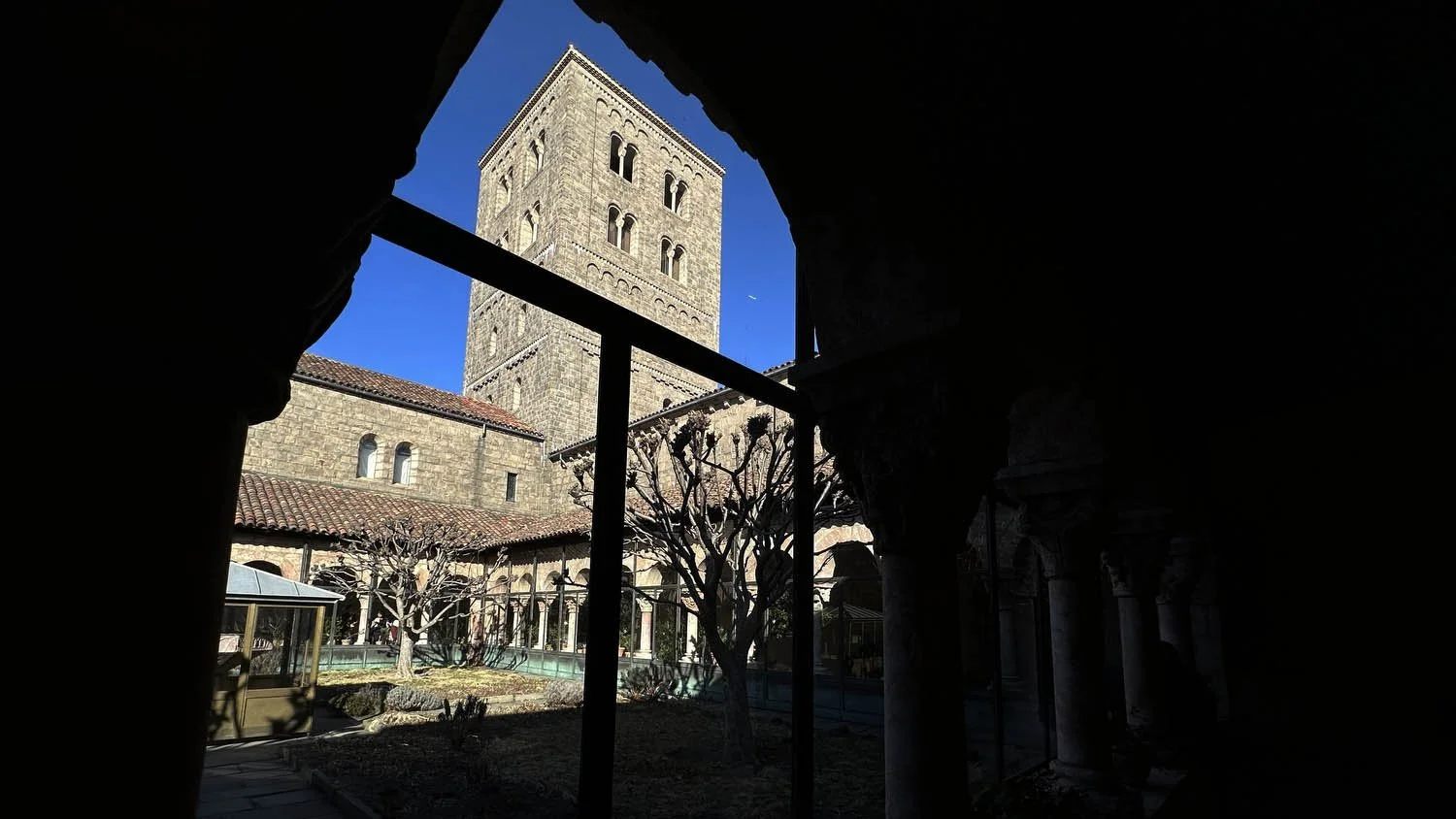
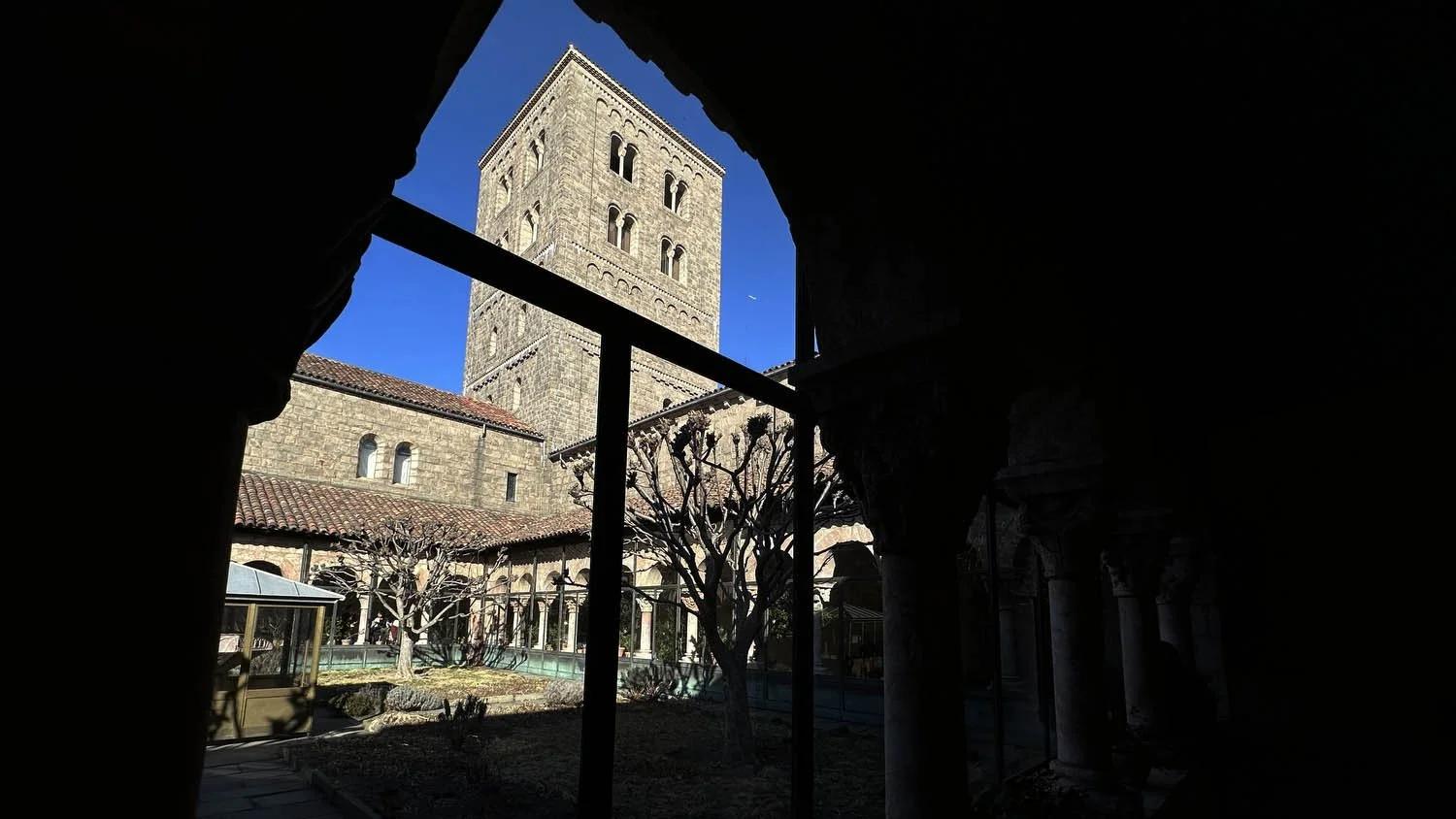
The Met Cloisters in northern Manhattan, NYC. All photos by John O’Boyle / The Empty Nest Explorers
If you want to escape the pace of New York City without actually leaving it, the Met Cloisters is worth the trip uptown.
The museum sits in Fort Tryon Park in northern Manhattan, perched on a hill overlooking the Hudson River. It's part of the Metropolitan Museum but feels like a completely different world.
The building incorporates real medieval architectural elements imported from Europe and showcases tapestries, sculpture, stained glass, metalwork, and medieval gardens.
John D. Rockefeller funded the purchase of the Fort Tryon Park site and the acquisition of George Grey Barnard's medieval art collection in 1925.
| 📍 Address | 99 Margaret Corbin Drive, Fort Tryon Park, New York, NY 10040 |
| 🕙 Hours | 10 am – 5 pm (check metmuseum.org for seasonal variations) |
| 🚫 Closed | Wednesdays, Thanksgiving, December 25, January 1 |
| 🎟️ Admission | Adults $30 · Seniors $22 · Students $17 · Children under 12 free · NY State residents & tri-state students pay what you wish (ID required) |
| 🚇 Subway | A train to 190th Street, then a 10–15 min walk north through Fort Tryon Park |
| 🚌 Bus | M4 bus to the last stop (longer ride than subway) |
| 🚗 Parking | Free parking in Fort Tryon Park — limited spots, arrive early or late |
| ☕ Café | Trie Café open April – October |
| ⏱️ Time needed | 2 – 3 hours at a relaxed pace |


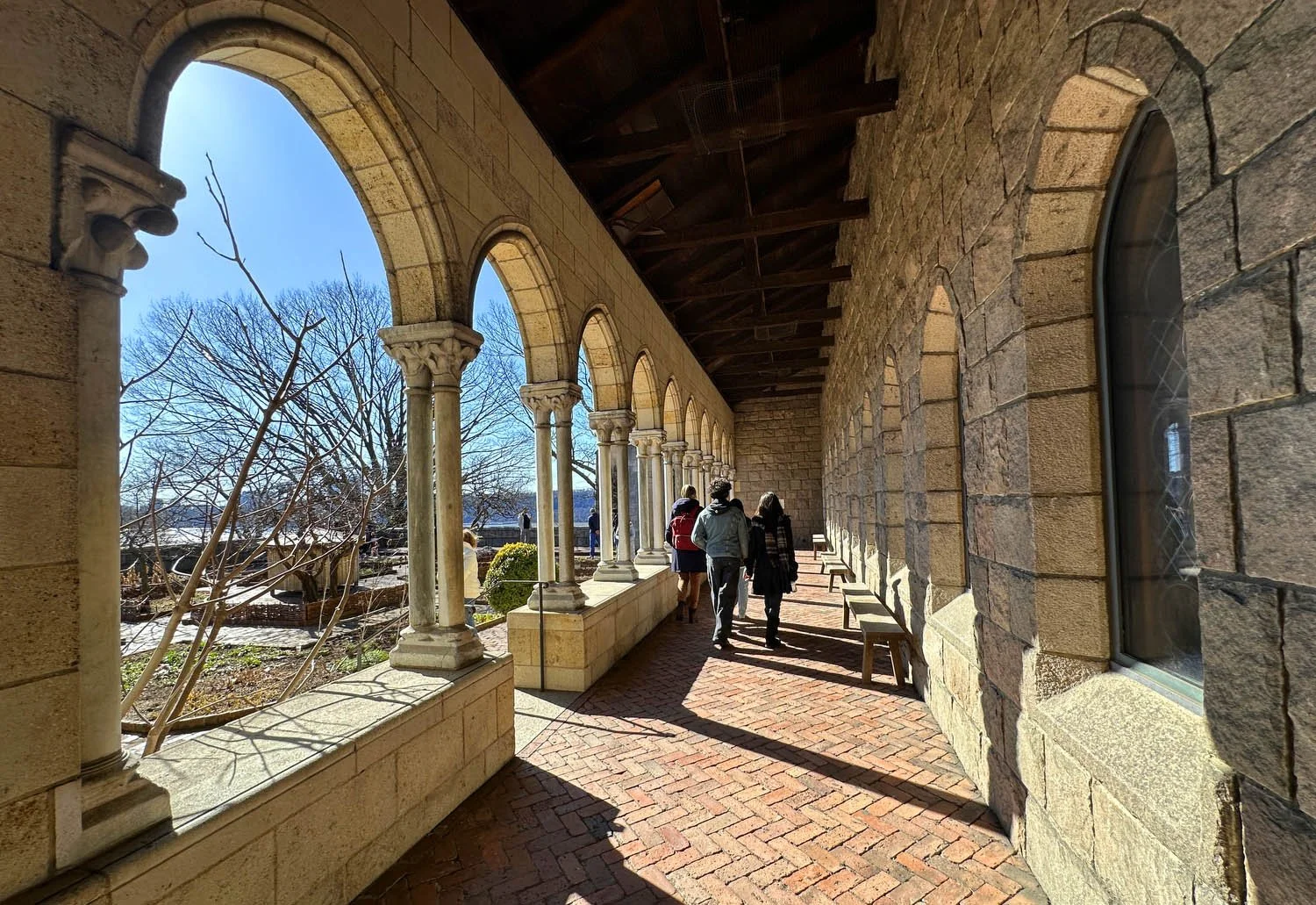
The museum has four main cloisters (Cuxa, Saint-Guilhem, Bonnefont, Trie) that incorporate stonework and features taken from French and Spanish medieval monasteries and abbeys, shipped to New York and reassembled.
Many of the other rooms feature 12th and 13th-century elements shipped to New York from France and Spain.
The rooms definitely transport you to Europe, and it doesn’t feel like they were disassembled and shipped here. The whole museum has a cohesive feel and looks like it has stood in NYC since the 12th century.
Visiting the Cloisters
Like many museums, the Cloisters visitor path leads you from room to room and floor to floor. Moving from one stone room to another is broken up by passing through the four beautiful cloisters.
Unicorn Tapestries
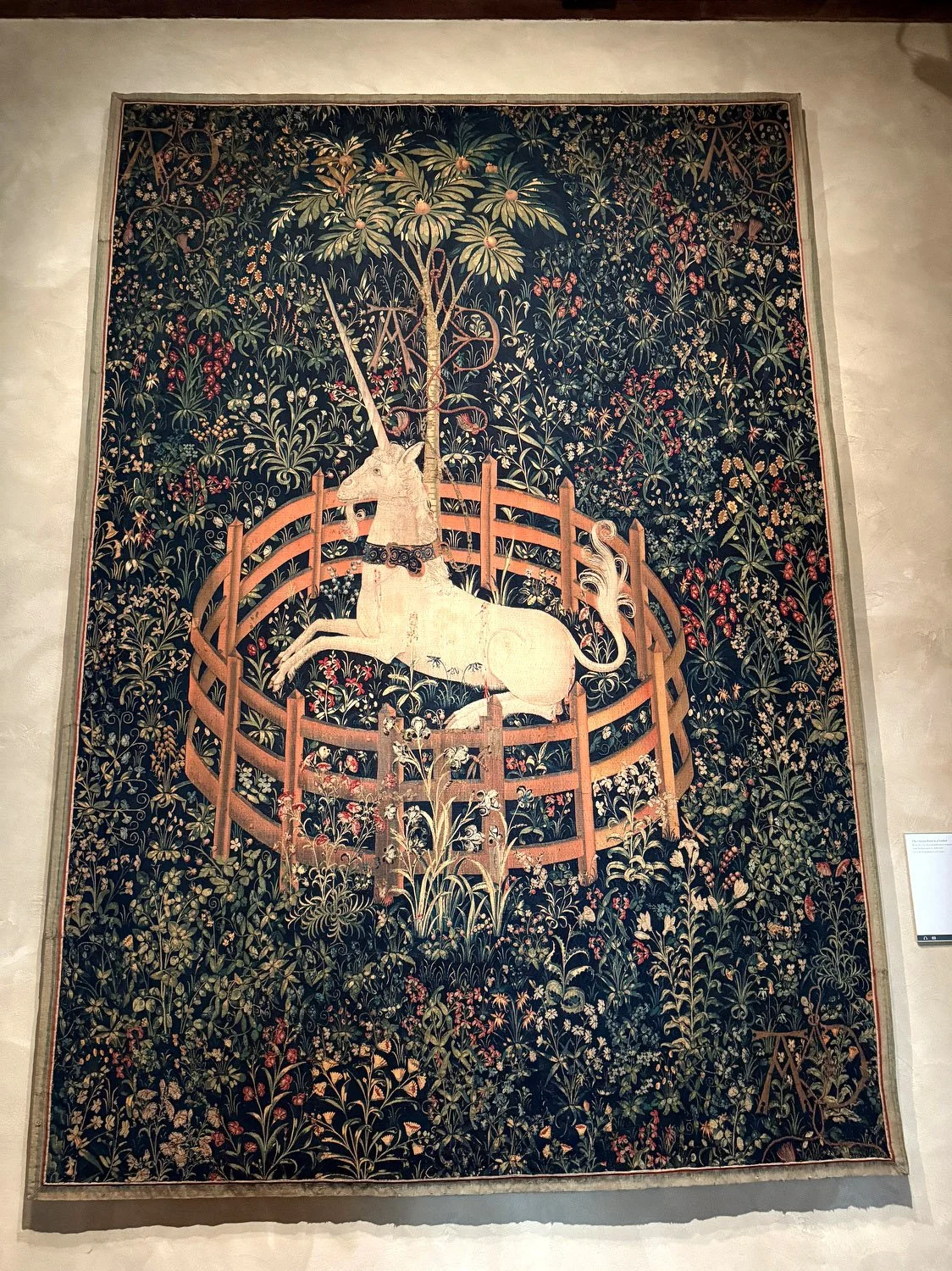
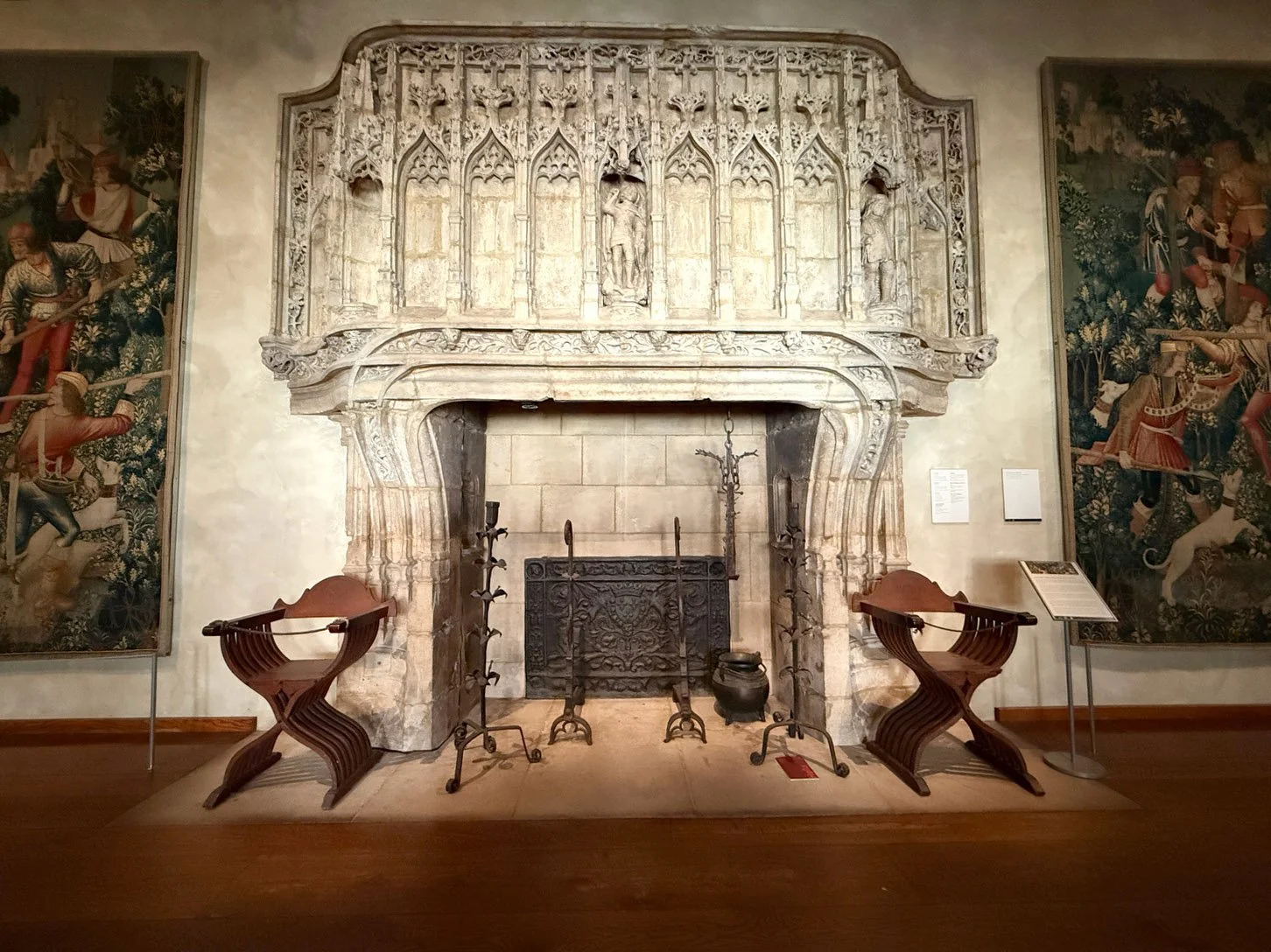
The museum's most famous works are the Unicorn Tapestries.
There are seven of them, woven from wool and silk, and they date to around 1500.
They're displayed in their own dedicated room. Up close, the detail is remarkable. We'd seen tapestries in museums before, but these are on another level.
One thing that stood out to me was the ornate room in which the tapestries are displayed (see photo above). The room would be interesting even without the amazing tapestries.
Cuxa cloister
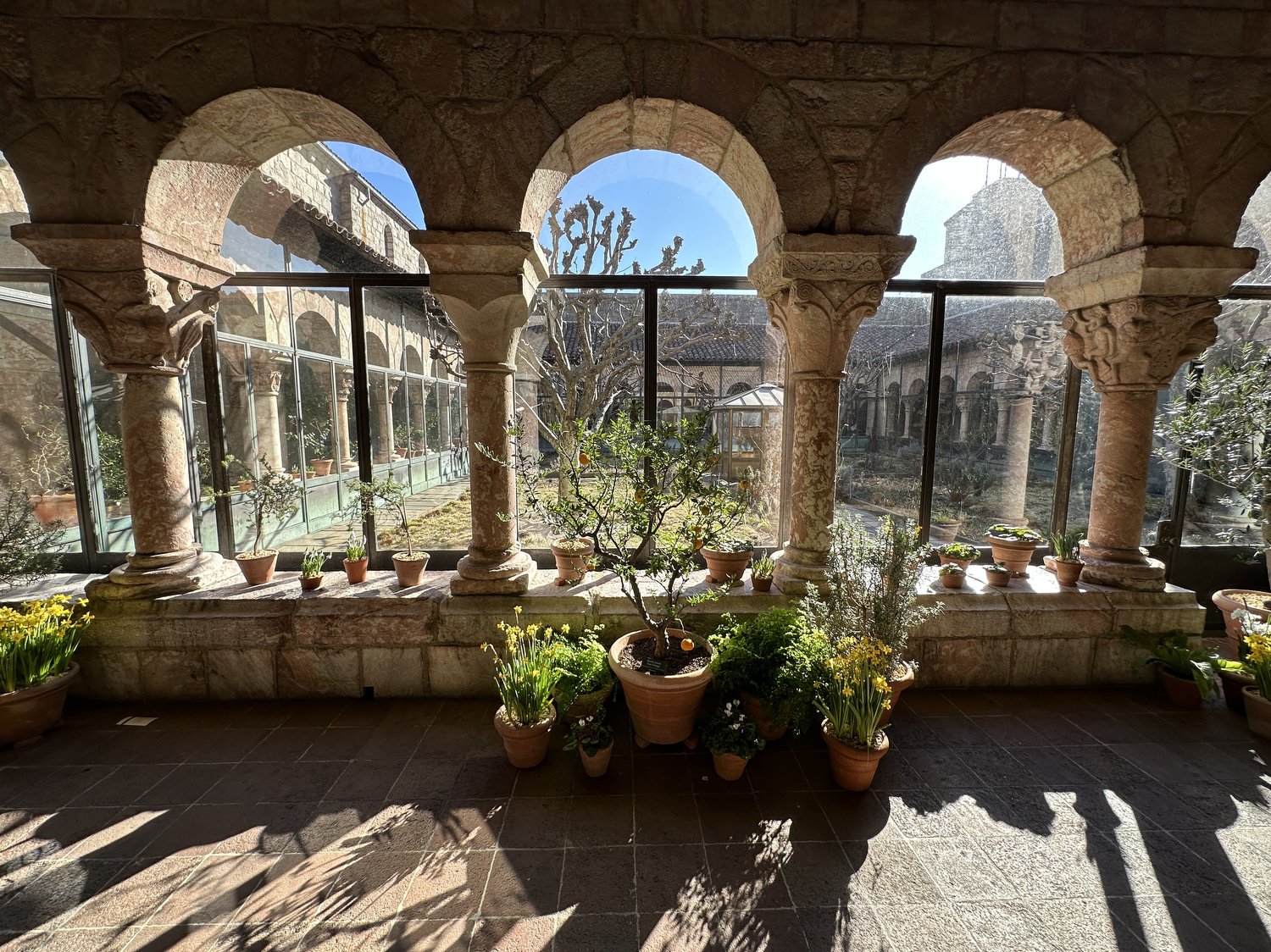
Looking at the museum map, you’ll see the Cuxa cloister located right in the middle of the first floor.
Most of what you see is from the Benedictine Abbey of Sant Miquel de Cuixà in Spain. The building was founded in the year 878 but was abandoned and fell into disrepair in 1791.
About half of its stonework was moved from Spain to New York between 1906 and 1907 and was one of the first areas of the Cloisters open to the public.
Trie cloisters

Most of the Trie cloisters material comes from the Carmelite convent at Trie-sur-Baïse in south-western France. The building dates to the early 16th century.
The rectangular garden hosts around 80 plant species and contains a tall fountain.
Saint-Guilhem cloister
The Saint-Guilhem cloister takes its name from a Benedictine abbey in southern France.
Most of the carved marble columns and capitals here date to the late 11th and early 12th centuries. It's one of the more ornate spaces in the museum.
Bonnefont cloister
The Bonnefont cloister draws from a Cistercian abbey in southwestern France.
The garden here is planted with herbs and plants that would have been grown in a medieval monastery. It's a quieter spot than the Cuxa cloister and is worth a few minutes to slow down and look around.
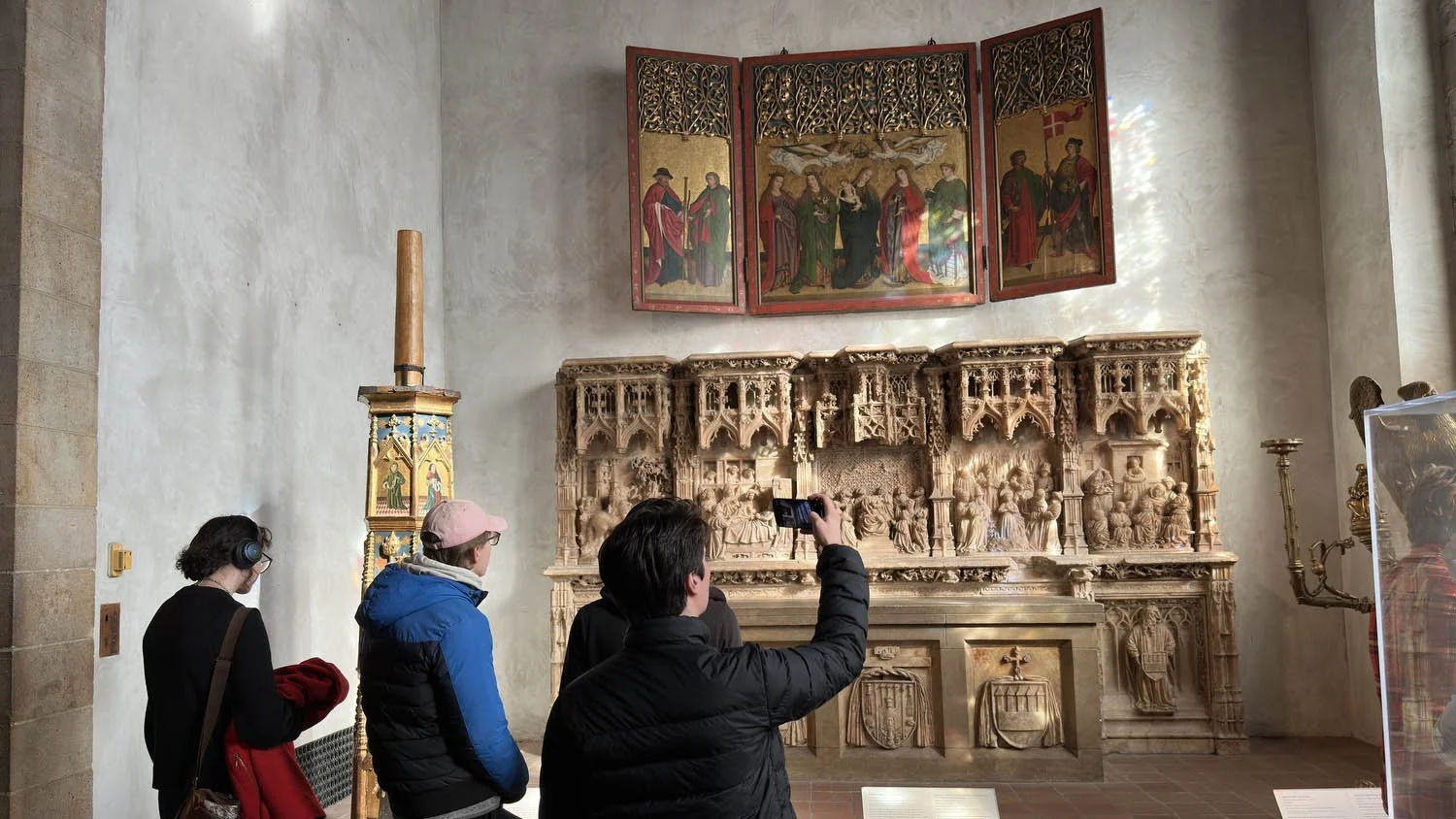
Gothic chapel
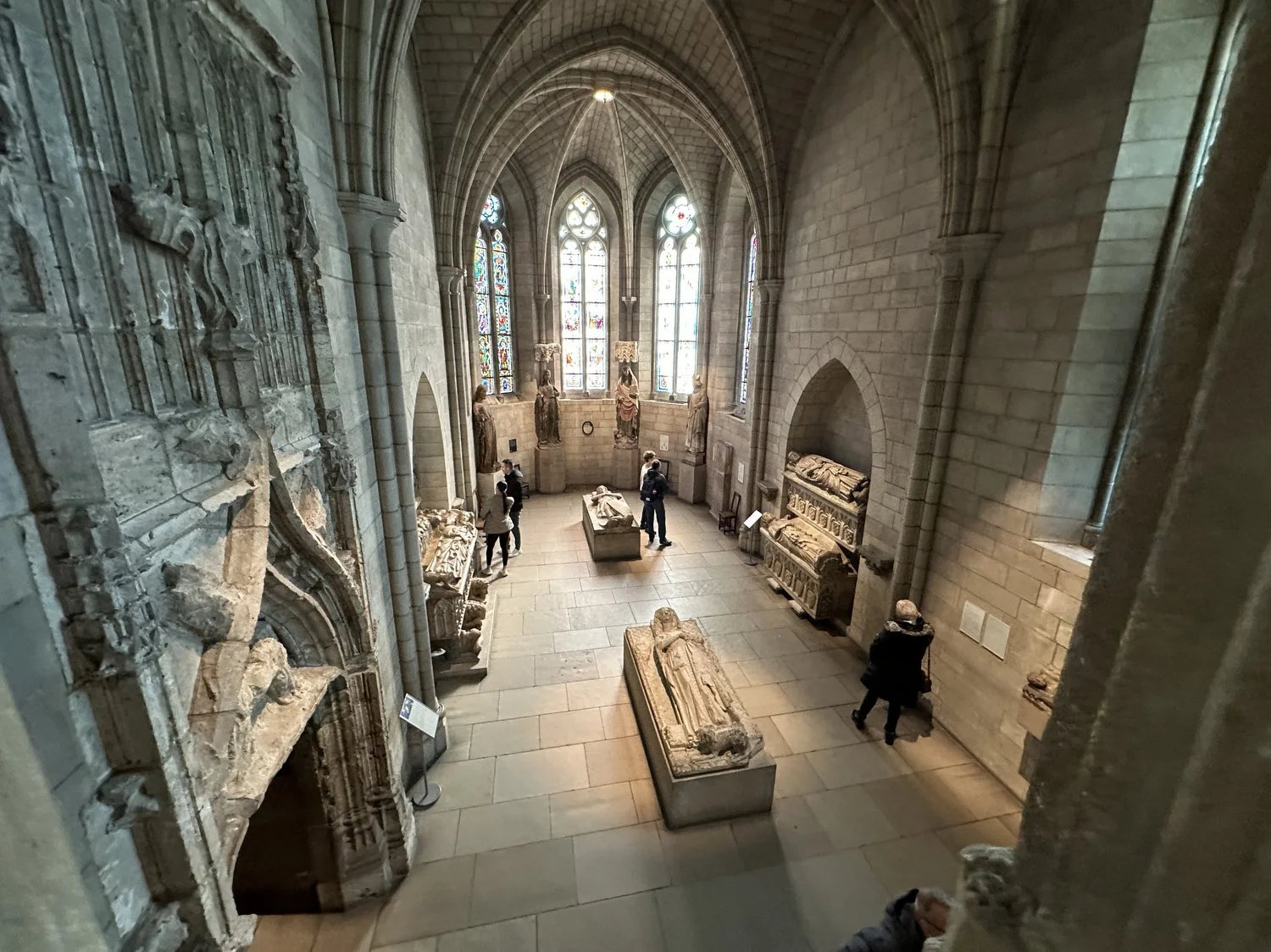
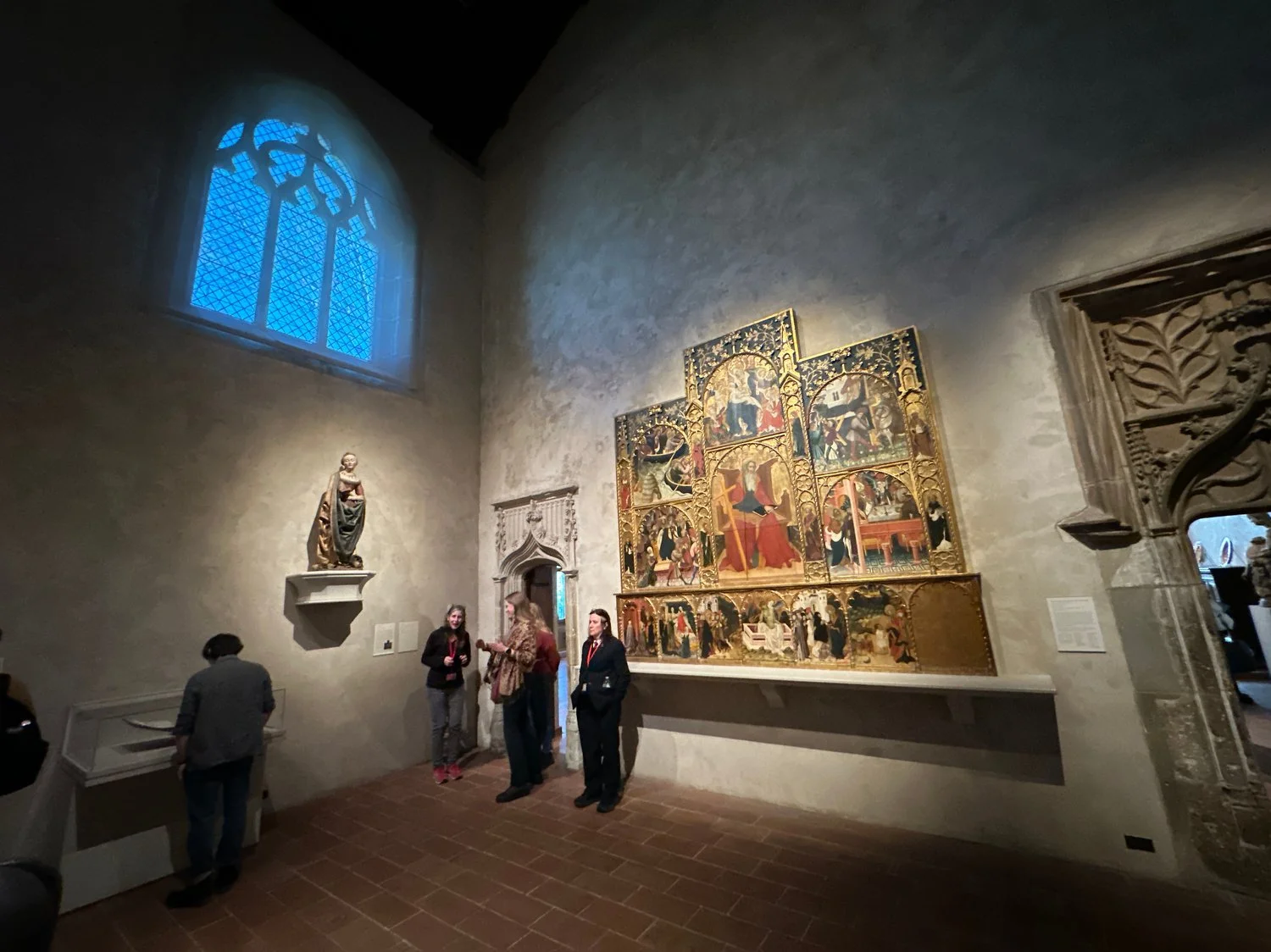
The Gothic chapel at the Met Cloisters.
The Gothic chapel is one of the Cloisters’ most striking rooms. You can enter from the ground floor, but the view is much better when entering from the first floor and walking down the stairs.
The museum built the chapel to house its stained glass and large sculpture collections.
Much of the room’s collection comes from France and Spain.
Looking for another unique NYC Museum? Here’s our post on the Tenement Museum: Visiting The Tenement Museum, one of our favorite NYC museums
Fuentidueña chapel
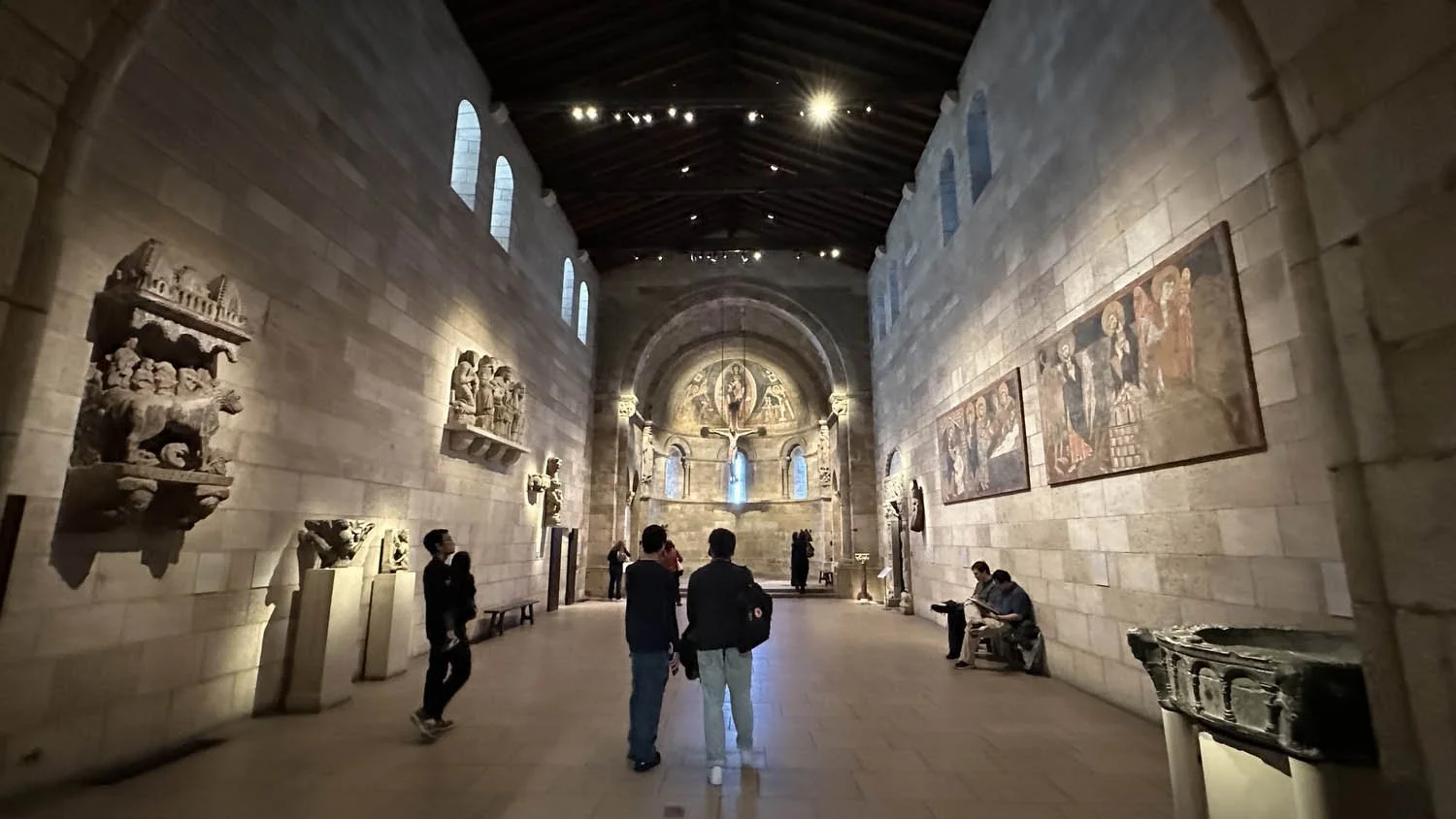
The Fuentidueña chapel is both the museum’s largest room and starkest.
It was fun to learn that the giant domed area in the chapel comes from the Fuentidueña chapel in Segovia, Spain. We visited Segovia two years ago and loved the town.
You can read our blog post: Visiting Segovia: a perfect day trip from Madrid
Getting to the Cloisters
We have both driven and taken the subway to Cloisters. Either way works well, depending on where you are coming from.
Driving:
The Cloisters is near the George Washington Bridge, so it’s easy to visit from New Jersey and Pennsylvania. It’s also an easy drive from New York State and Connecticut.
Take Henry Hudson Parkway northbound to the exit after the George Washington Bridge (signed “Fort Tryon Park & The Cloisters”). This exit is accessible only from the northbound lanes; if you are coming from the north, follow directions for a U-turn to approach northbound.
There is free parking in Fort Tryon Park, but the spots are limited, so arriving early or late in the day may be the best bet if you are visiting at a popular time of year.
Subway:
The best way is to take the A train to 190th Street. After exiting, walk north through Fort Tryon Park. It’s a pleasant 10-15 minute walk.
New to the NYC subway? Our NYC Subway Guide for Visitors 2026 has everything you need to know
Bus:
You can also take the M4 bus; the Cloisters is its last stop.
Keep in mind the bus ride will be much longer than the subway, depending on where you are coming from.
Interested in visiting the main Metropolitan Museum on Fifth Avenue in NYC? We have all the details on our blog post: Visiting the Metropolitan Museum
Best Time to Visit
The gardens are at their best in spring and fall.
April and May bring the flowers, and September and October give you the foliage and some of the best views of the Hudson. Summer works too, but the gardens get crowded on weekends.
For the museum itself, a weekday morning is the sweet spot. The Cloisters is quieter than the main Met on Fifth Avenue, but it still gets busy on weekends, especially when the weather is good.
Arriving around 10 am on a Tuesday or Thursday gives you the best chance of having the cloisters mostly to yourself.
Helpful information for your Cloisters visit
The Met Cloisters is open daily from 10 am to 5 pm and is closed on Wednesdays, Thanksgiving, December 25, and January 1. Check metmuseum.org before you go, as seasonal hours can vary.
Plan 2 to 3 hours for a relaxed visit.
Tickets are $30 for adults, $22 for seniors, and $17 for students. Children under 12 are free. New York State residents and NY, NJ, and CT students pay what they wish with a valid ID.
All tickets include same-day entry to both Met locations.
Due to its landmark status, the Cloisters has limited step-free access for wheelchair and stroller users. A free shuttle runs from the park entrance to the museum entrance for visitors who need it.
The Met offers a free digital guide through the Bloomberg Connects app. Worth downloading before you go.
Guided tours run regularly and the schedule changes, so check the Cloisters website for current times.
The Trie Café is open April through October and serves sandwiches, salads, coffee, and drinks.
About the Authors

|
John and Debbie O'Boyle are the team behind The Empty Nest Explorers. John is a professional photographer whose work has been published by The New York Times, NBC News, and Getty Images. He is a member of the American Society of Media Photographers, has been part of a Pulitzer Prize-winning team, and has received two New York Emmy nominations. Debbie is a writer with 30+ years of professional photography experience, formerly with The Star-Ledger and NJ.com. Together, they create in-depth travel guides for couples and empty-nest travelers who want to make the most of every destination. |
Some well reviewed New York tours:
Our other New York City travel posts:







The Chase Sapphire Lounge at JFK Airport is an upscale lounge with many refined features.
The lounge serves top-notch food and drinks.